OpenAI is reportedly raising an additional $11 billion at a $1.25 trillion valuation. The funding round hasn't closed but is expected to do so in the coming weeks, TechCrunch reports. OpenAI hasn't confirmed this.


Independent watcher for major OpenAI news across official sources and selected journalism. Not affiliated with OpenAI.
OpenAI is reportedly raising an additional $11 billion at a $1.25 trillion valuation. The funding round hasn't closed but is expected to do so in the coming weeks, TechCrunch reports. OpenAI hasn't confirmed this.
OpenAI has added editable tools, background context compaction and optional time awareness to the Agents API public beta. Tool changes take effect on the next model call for function tools and MCP servers, or by the next turn for built-in tools. Time awareness is disabled by default; background compaction may use more tokens.
OpenAI has introduced BioBasicsBench, a 100-task benchmark for AI agents interpreting routine wet-lab data. GPT-6 Astra earned 66.7% of available credit at the highest reported reasoning setting, compared with 43.8% for GPT-5.6 Sol. The tasks test data interpretation, error detection and whether evidence supports a conclusion.

OpenAI has partnered with security researchers at Hacktron to test vulnerabilities in its systems, expanding their access to frontier models. The teams will choose high-priority areas to test together, focusing on how OpenAI’s systems interact with third-party services. Hacktron’s expanded access comes through Daybreak Red.
OpenAI has made outbound SIP calling available to all organizations through the Live API. Developers can connect GPT-Live to a phone number through a SIP provider. Eligible Agents API projects can also use automatic model review to approve or deny supported tool and permission requests based on conversation intent and risk; additional tokens are billed.
UNSW is expanding ChatGPT Edu access to more than 80,000 students and staff in stages. OpenAI also details collaborations with the University of Sydney, La Trobe and Adelaide University, covering AI access, teaching and research.

OpenAI has introduced GPT‑6 Cyber, which found 81 high-severity Firefox vulnerabilities and developed 948 working Linux exploits. Mozilla has released fixes for many of the Firefox flaws. OpenAI says the model avoided exploiting out-of-scope services in 99.93% of tests without deployment prompts and 100% with them.
OpenAI could be ready to go public in 2027. President Greg Brockman pointed to accelerating enterprise revenue and a business turnaround, TechCrunch reports.
OpenAI has added GPT-6-Cyber to its API for investigating vulnerabilities, reproducing them in authorized test environments and verifying fixes. Developers should review the Daybreak setup before making their first request.
OpenAI has pledged local oversight, energy-cost coverage and public reporting for every future compute campus it owns and operates. Its National Community Compact also commits to water plans, publishing resource use and noise studies, and creating local jobs and business opportunities. A separate policy blueprint urges governments to set rules for responsible campus development.
OpenAI has released GPT-Image-2.6 Sunburst and GPT-Image-2.6 Flare for image generation and editing. They support adjustable complexity, SVG generation and animated GIF generation. Markup-guided editing is also available for supported GPT Image 2.5 and 2.6 models.
OpenAI’s prototype generated 948 working Linux privilege-escalation exploits and candidate patches in one run. The pipeline used an upcoming cyber model and cost $1.2 million in API credits; human researchers reviewed the outputs before reporting vulnerabilities and patches to maintainers.

OpenAI will acquire Pierre Computer Company, whose open-source Git tools are already used in Codex. The deal brings the team behind Code Storage and the Trees and Diffs libraries into OpenAI’s effort to build Codex’s code-review and Git workflows. Pierre’s open-source projects will remain open source, and Code Storage customers can keep using the service after the acquisition closes. The deal requires regulatory approvals.
OpenAI has made GPT‑5.6 Cyber available to approved customers in AWS GovCloud (US-East) through Daybreak Red. Access requires OpenAI approval and AWS provisioning. OpenAI says inference data isn’t used to train models, and customers don’t need to share Daybreak Red data with OpenAI.

OpenAI has scheduled the shutdown of its o3 and o4-mini deep-research API models for July 23, 2026. The deprecation also covers their June 26, 2025 snapshots.
OpenAI has appointed former Uber executive Jill Hazelbaker as its Chief Corporate Affairs Officer. She'll lead global communications and corporate positioning, drawing on nearly two decades advising technology companies and political leaders.

OpenAI says model use across its hardware teams has risen 23-fold since February as engineers use Codex and ChatGPT for CAD, manufacturing drawings and simulations. The company also describes Astra helping design a working device prototype in under a week and new engineering collaborations with Chip Ganassi Racing and Mazda.

OpenAI will more than quadruple rewards for critical security findings as it starts a new security sprint with security researchers at Cathedral. The researchers will use OpenAI models with its teams to test and strengthen the company’s defenses.
OpenAI has raised bug-bounty rewards, offering up to $172,000 for exceptional critical vulnerabilities in core products such as ChatGPT, Codex and the API Platform. Critical findings can earn up to $30,000, with bonuses for high-quality reports, researcher loyalty and priority campaigns. New rates also apply to qualifying recent and pending awards.
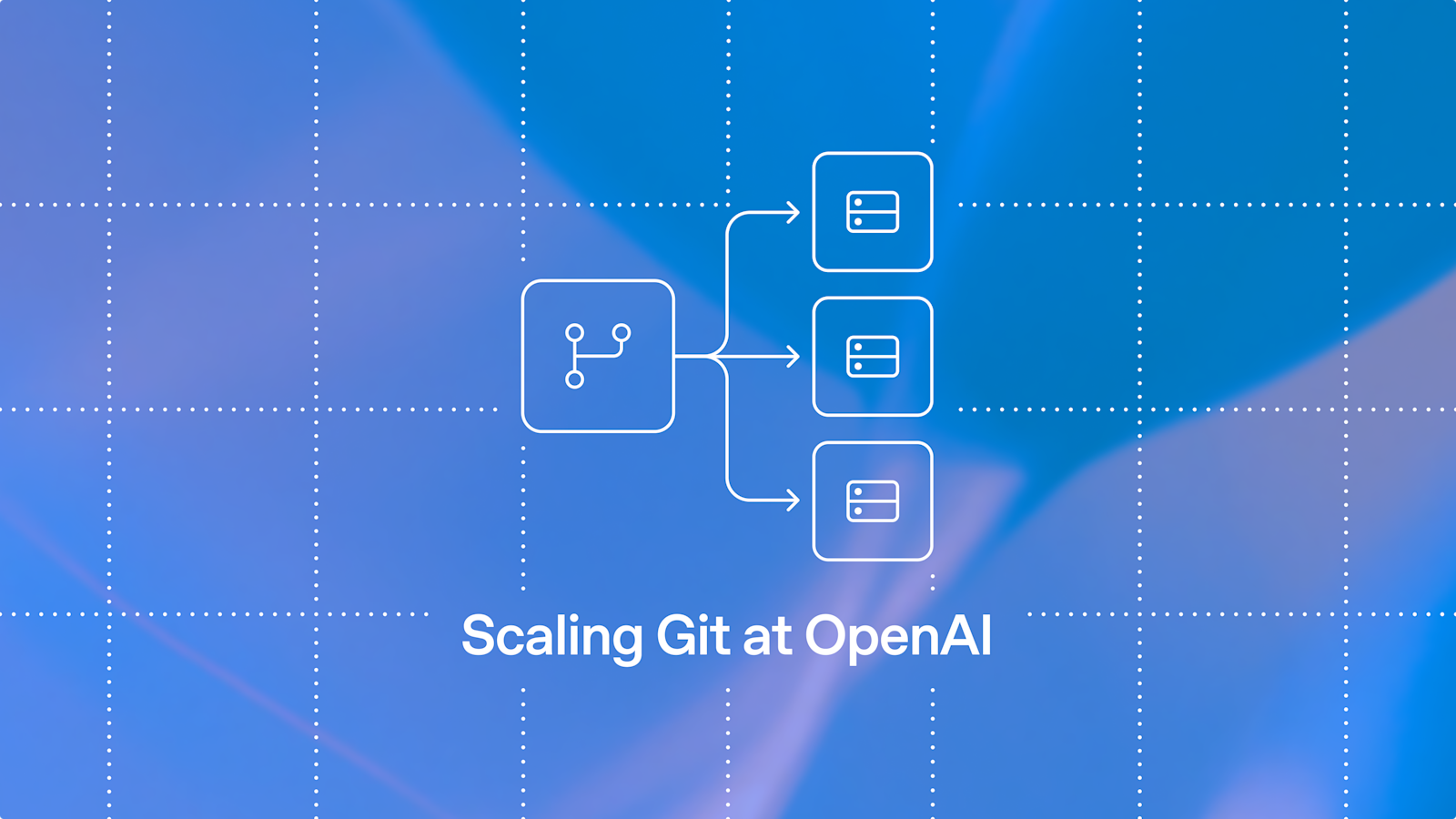
OpenAI has moved its monorepo to Pando, cutting median Git push latency nearly fivefold. The new Git-compatible backend now serves nearly a petabyte of Git data per day and powers all development in the monorepo.